


For Avrumi Deutsch, 40, a medic and volunteer ambulance driver for MDA, October 7th began at his home in the community of Retamim.
He was on call for an MDA ambulance that Saturday, and when he awoke to the sound of sirens, he did not yet know that within a few hours he would be treating casualties from the battles in the Gaza envelope, joining his reserve unit in Kibbutz Holit, and getting injured himself.
Avrumi, married to Meital and a father of four, began receiving reports that morning about the events unfolding in the area. MDA volunteers were asked to stay close to their ambulances and be ready for deployment. Later that morning, he received a call from the MDA dispatch center informing him that three seriously injured individuals from Kibbutz Magen were in a vehicle heading his way.
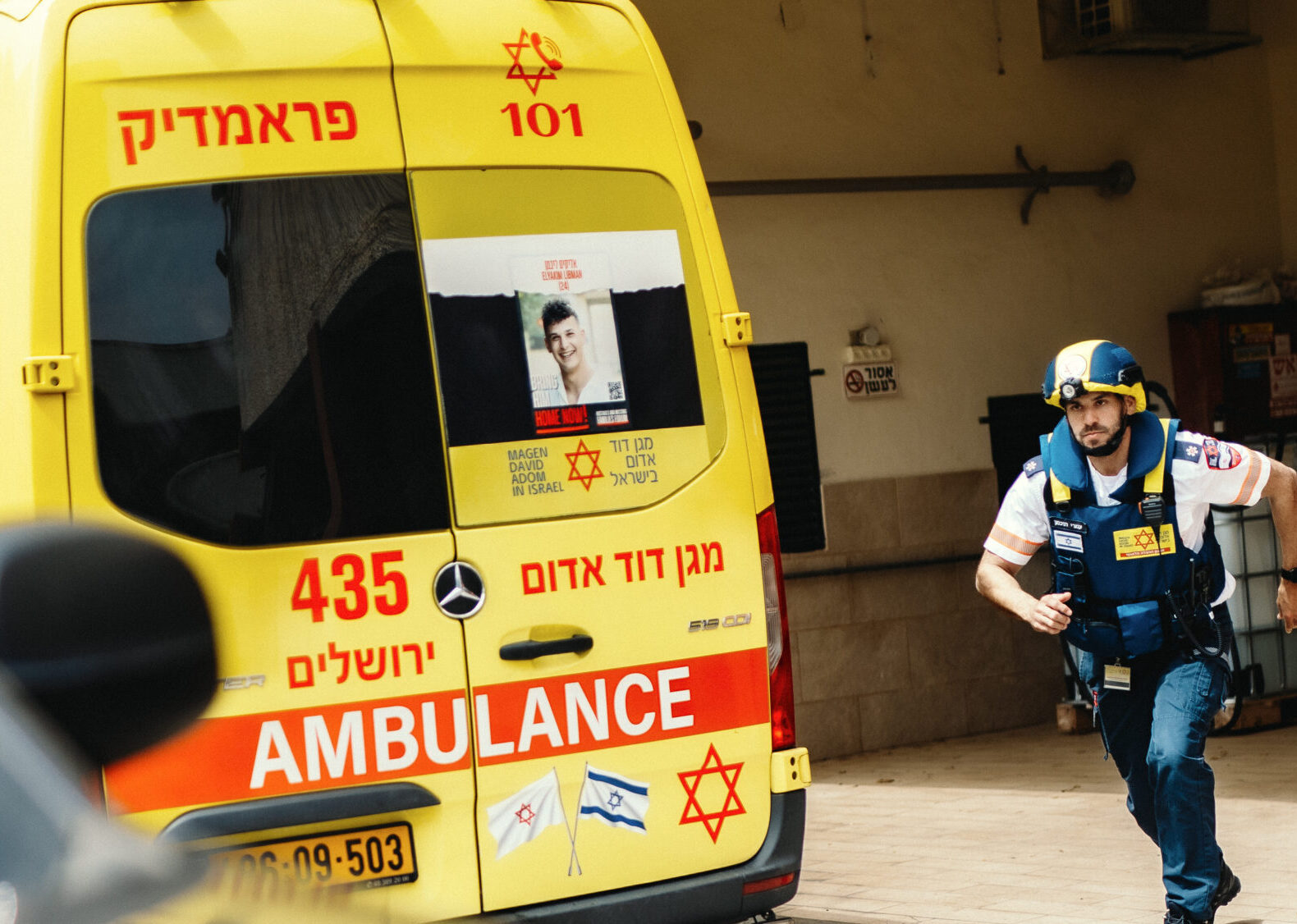
Avrumi set out in an ambulance with MDA medics Matanya Cohen and Emmanuel Rothschild to meet the injured.
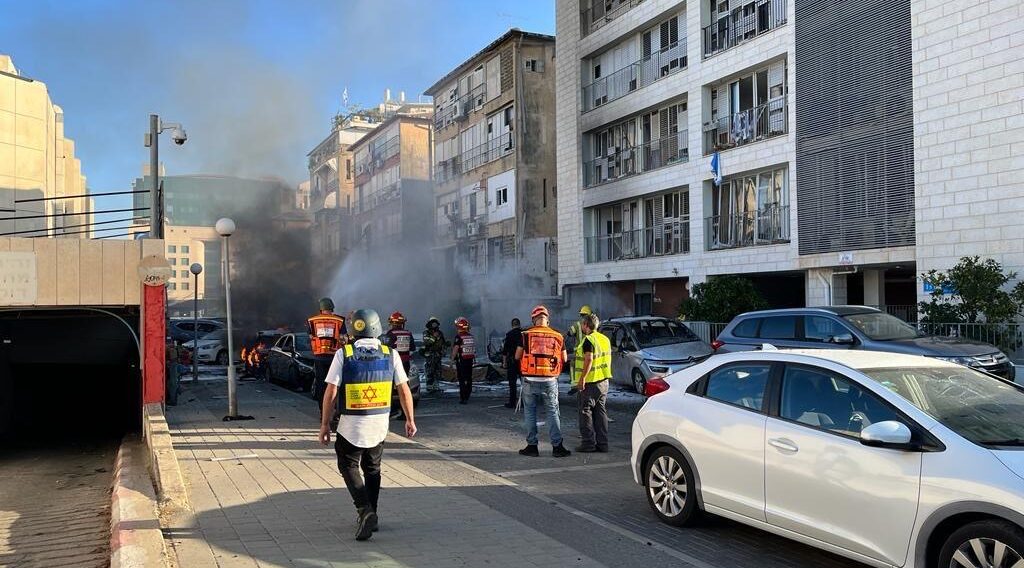
Under the sirens and rocket fire, they met the vehicle, which also carried a doctor from Kibbutz Magen. They removed the three injured individuals and divided the treatment among themselves. An intensive care unit team also arrived at the scene. The primary focus of treatment was stopping bleeding, while the team simultaneously updated the MDA dispatch center on the situation and requested a helicopter to quickly evacuate the injured to the hospital.
One of the injured was Baruch Cohen, the security coordinator of Kibbutz Magen, who was severely wounded in a battle with terrorists while defending the kibbutz. Avrumi treated him, and as the team carried Baruch on the stretcher towards the ambulance, he grasped one of their hands and said: “Friends, I want to say goodbye.” He then closed his eyes.
Avrumi, Matanya, Emmanuel, and the rest of the team continued to treat him and tried to keep him conscious.
“I thought he was dying in our hands and wouldn’t make it to the hospital alive,” Avrumi recalls. “His injuries were very severe.”
An MDA helicopter arrived, and Baruch was transferred to it for further treatment and evacuation to Hadassah Ein Kerem Hospital, where he underwent resuscitation and surgery during which his leg was amputated. Avrumi remained behind, not knowing if Baruch, whom he was convinced he was losing just minutes earlier, would reach the hospital alive.
After the three injured from Magen were evacuated, Avrumi returned to Retamim, but for him, the day was not over. He joined his reserve unit and went to Kibbutz Holit. Within a few hours, his role in the event changed. In the morning, he received injured individuals who had been extracted from the combat zone, treated them with his MDA colleagues, and transferred them for further evacuation. Later that day, he himself entered the Gaza envelope as a reservist and was severely wounded in battle.
During those hours, MDA teams continued to move between scenes in the south. One of them was an intensive care unit ambulance team consisting of paramedics Omri Caspi and Itzik Yanai. Their morning began with the evacuation of a woman in her eighties who sustained a head injury from a safe room window in Be’er Sheva, and continued to a rocket impact site and to rendezvous with an ambulance evacuating injured police officers.
The team then headed towards Netivot and Ofakim, and as the day progressed, moved between various scenes and casualties in the area. At the treatment site in Ofakim, Omri was required to pronounce two Yassam police officers dead, and from there, the team was called to Urim Base, where they treated a female soldier who had been shot in the abdomen and evacuated her to the hospital.
After the evacuation, Omri and Itzik returned towards Ofakim and received a call for another rendezvous, this time with a military vehicle transporting a casualty from the fighting. When they arrived at the meeting point at the city’s entrance, they received a soldier who suffered chest and spinal injuries and was semi-conscious.
It was Avrumi Deutsch.
Several hours after treating Baruch and the two other injured individuals from Magen, Avrumi was now on the other side of that same chain of care. Omri, Itzik, and the team provided him with treatment and evacuated him to the hospital. The injury left him paralyzed, and he later began a rehabilitation process at Loewenstein Hospital.
There, during rehabilitation, Avrumi also found the continuation of the story that began that morning near the ambulance. To his surprise, he met Baruch Cohen, the security coordinator of Magen, at Loewenstein Hospital, who had also undergone months of hospitalization and rehabilitation. For Baruch, it was a meeting with the medic who treated him during moments he doesn’t fully remember, and for Avrumi, with the man whose last image he had was on the stretcher, severely wounded, telling the team he was saying goodbye.
The meeting at Loewenstein Hospital connected two paths that began at the same scene and diverged with Baruch’s helicopter evacuation. Avrumi could see that the injured person he thought wouldn’t survive was before him, and Baruch met one of the MDA personnel who treated him in the field and transferred him for the continued care that saved his life.
Avrumi’s story is the story of the MDA personnel and volunteers who operated on October 7th. Throughout that day, over a thousand ambulances, more than three hundred of them in southern Israel, operated under fire and at personal risk to save lives. “There were injured people who needed treatment,” he concluded, “so we went out. We don’t overthink it; it’s a conditioned reflex for people in MDA. This is the mission and the calling.”